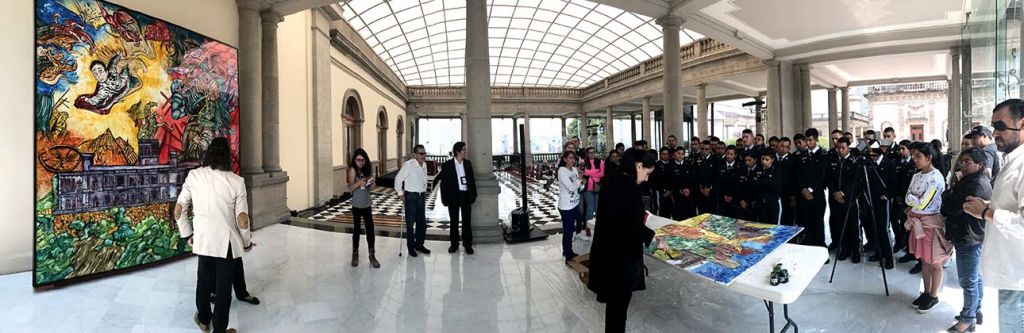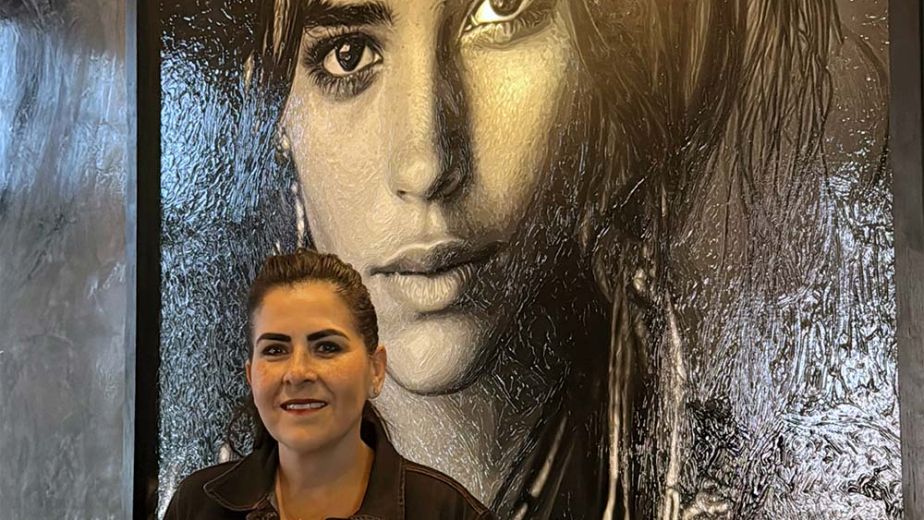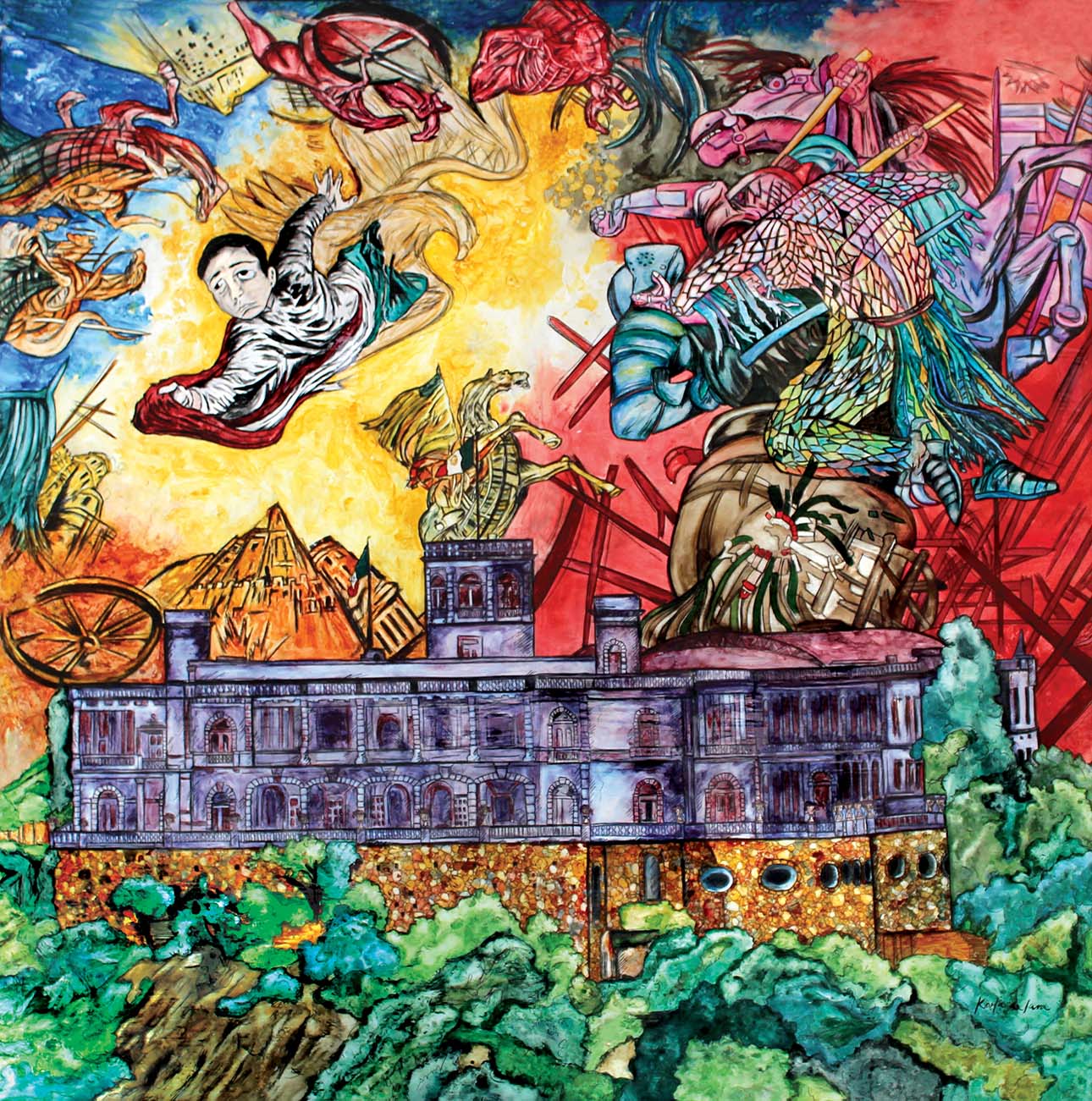

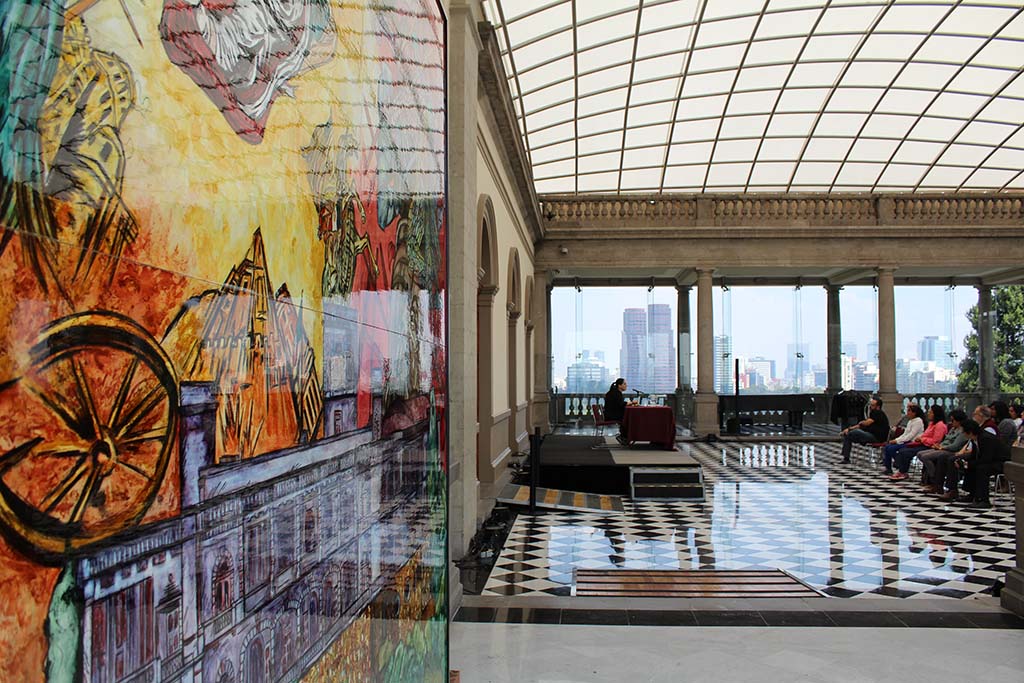
On September 17, 2018, “Visiones”, a work by Karla de Lara, was presented at the National Museum of History “Chapultepec Castle”, marking an extraordinary moment in the recent history of this institution. The painting was incorporated into the museum’s collection, becoming the first artwork added to the collection in more than 46 years, signaling a renewed dialogue between historical memory and contemporary artistic expression.
The work was created as a commemorative piece for the 74th anniversary of the National Museum of History, an institution that since 1944 has played a central role in preserving Mexico’s historical narrative.
A museum devoted to national memory
Located atop Chapultepec Hill, Chapultepec Castle is one of Mexico’s most powerful historical symbols. Throughout its history it has served as an imperial residence, a military academy, and today as the home of the National Museum of History, administered by the National Institute of Anthropology and History (INAH).
Before the inclusion of Visiones, the last artwork incorporated into the museum’s collection had been a piece by Dr. Atl (Gerardo Murillo), one of the most influential painters in modern Mexican art.
A tribute to Mexican muralism
In Visiones, Karla de Lara pays homage to the legacy of Mexican muralism, visually merging two historic murals that form part of the museum’s artistic heritage.
The first is “Fusión de dos culturas” by master muralist Jorge González Camarena, a work symbolizing the birth of Mexican identity through the encounter of two worlds. The second is “El sacrificio de los Niños Héroes” by Gabriel Flores García, a mural that represents nationalism, sacrifice, and devotion to the nation.
Together, these murals evoke two defining moments in Mexican history and hold particular significance for the artist.
A bridge between past and present
During the presentation of the work, museum director Salvador Rueda Smithers highlighted the cultural importance of the acquisition.
“The National Museum of History does not only preserve Mexico’s past; it must also engage with the present. Karla de Lara’s work opens a necessary dialogue between history and contemporaneity.”
Salvador Rueda Smithers
Through her distinctive surrealist style and vibrant chromatic language, Karla de Lara offers a contemporary reinterpretation of Mexico’s muralist legacy.
A message of national identity
In the composition, the two murals appear to rise above the skies of Chapultepec Castle, creating a symbolic visual narrative that connects past, present, and future.
“I wanted to pay tribute to the greatness of Mexican muralism and to two historic moments that shaped our national identity.”
Karla de Lara
The work ultimately conveys a powerful message: Mexico is the result of the fusion of two worlds and the strength of a people forged by history.