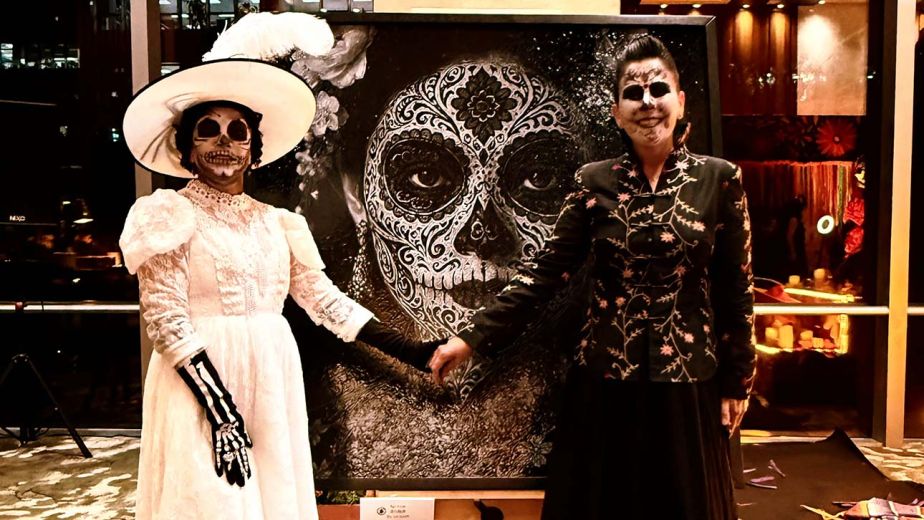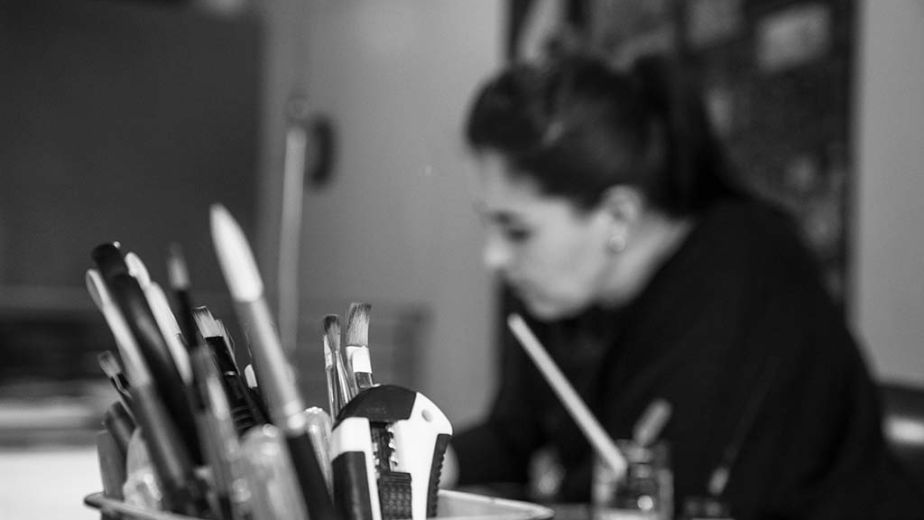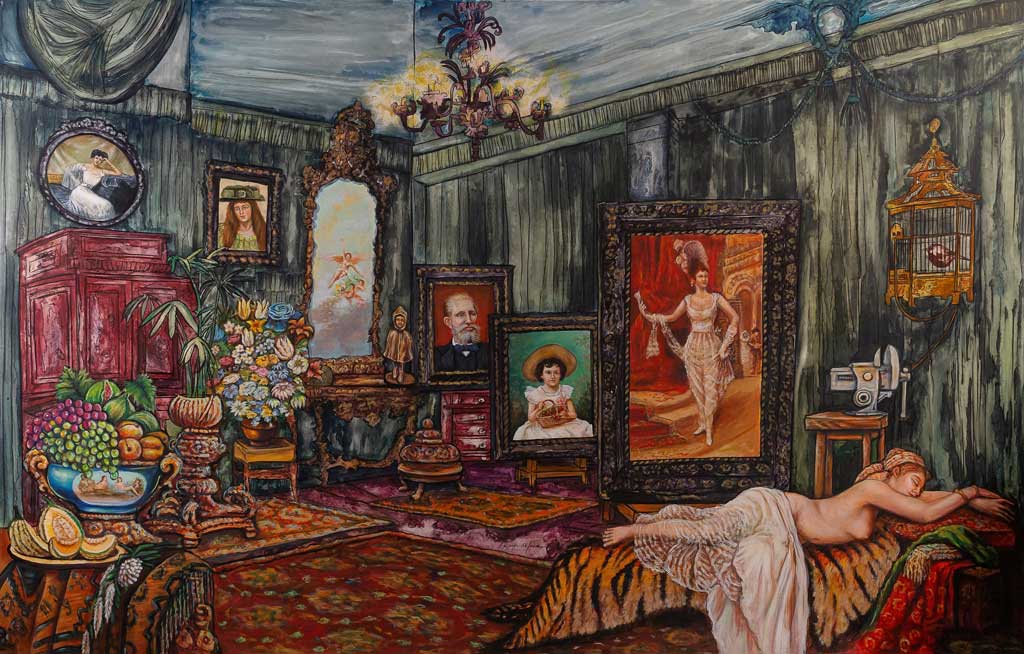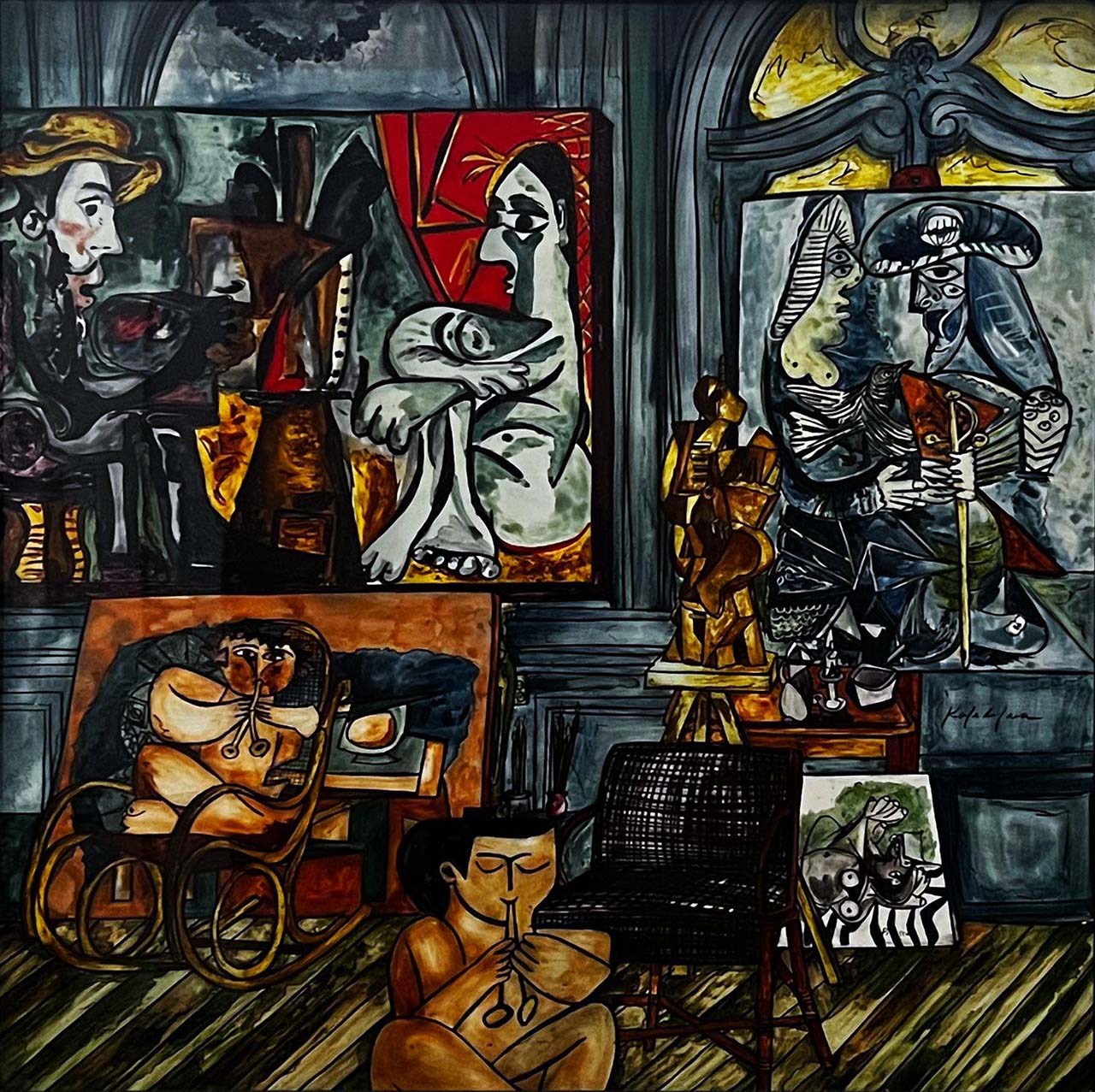

Some exhibitions bring works together. Others reveal an inner cartography. Entre Cruces, presented at ETRA Galería in October 2025, belongs to the latter: a visual constellation in which art becomes threshold, citation, resonance, and reinterpretation. The exhibition was accompanied by a talk for collectors, conceived as a space to engage more deeply with the artist’s trajectory, visual language, and symbolic power.
Crossing as dialogue
In this exhibition, Karla de Lara reaffirms one of the most distinctive virtues of her practice: her ability to connect temporalities, imaginaries, and aesthetic lineages that may initially seem far apart. Her work does not merely depict; it interprets, reframes, and re-signifies. Each piece emerges as a meeting point between art history, contemporary visual culture, and the deeply personal sensibility through which the artist reconstructs the world.
The title Entre Cruces points precisely to that fertile territory where references, symbols, and gazes converge. This is not crossing as collision, but crossing as possibility. A conversation between masters and contemporaneity. Between the classical and the pop. Between iconographic inheritance and the vibrant energy of an artist who has made chromatic intensity, technical precision, and conceptual depth her unmistakable signature.
Painting, memory, and reinterpretation
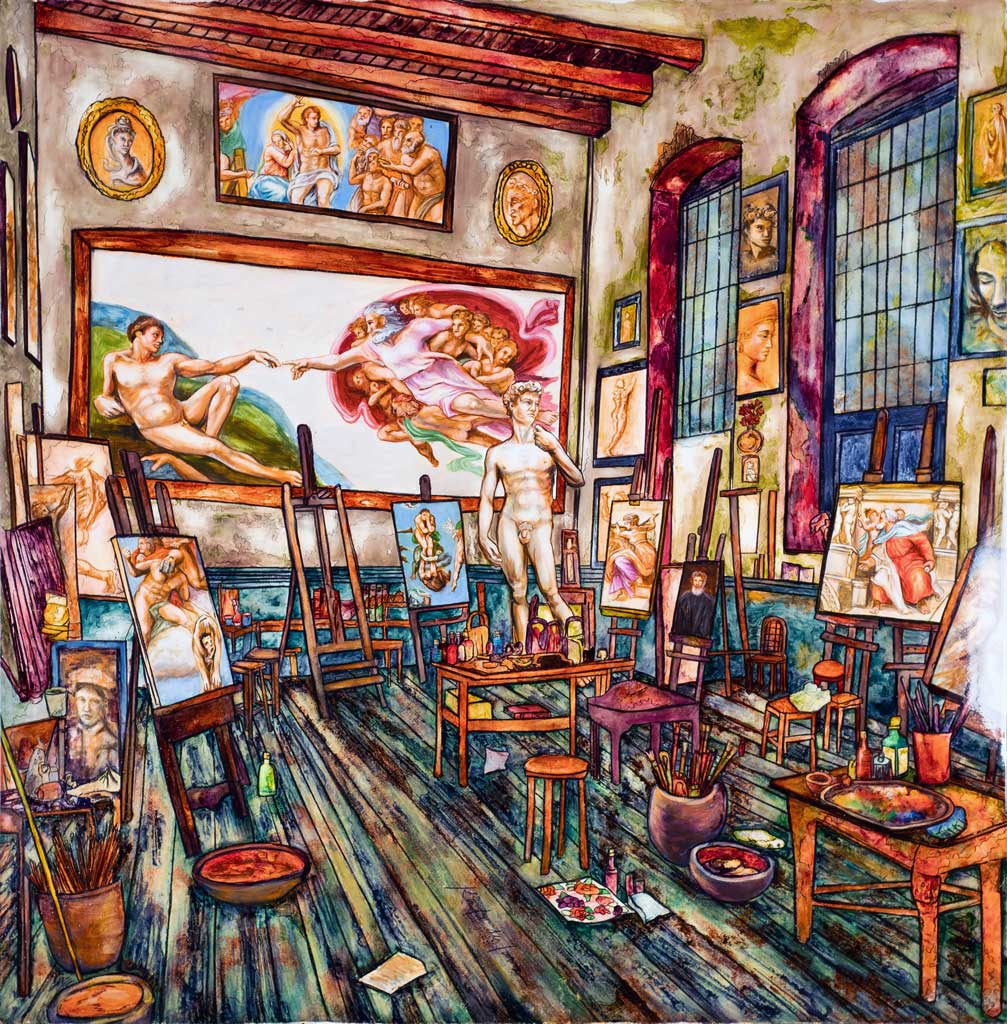
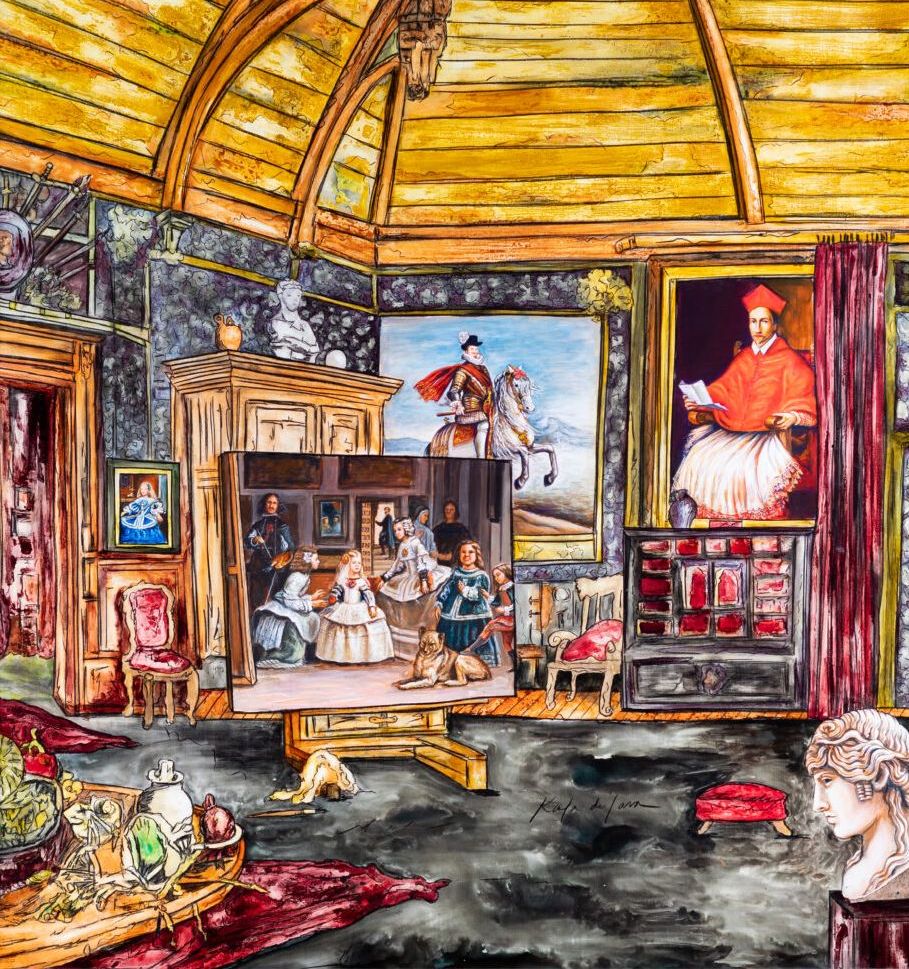
The body of work presented at ETRA reveals Karla de Lara in full command of her language: an artist who looks at tradition not with passive reverence, but with an active will to converse. Works such as “La Creación,” “Los Flautistas,” “Meninas,” and “Musa” reveal an authorial gesture that neither copies nor quotes literally, but instead moves through historical images and returns them to the present with a renewed emotional temperature.
In these pieces, reference becomes living matter. Painting ceases to be mere evocation and becomes interpretation. Karla engages with artistic legacy from a perspective that is free, lucid, and profoundly contemporary, where each work seems to open a new reading of what we thought we already knew.
Between homage and reinvention
In De Lara’s hands, painting becomes a site of intersection: between disciplines, eras, cultural references, and intimate impulses. These pieces hold a clear awareness of legacy, but also a luminous freedom to intervene in it. That tension — between homage and reinvention — becomes one of the exhibition’s most compelling curatorial keys.
Entre Cruces confirms that Karla de Lara’s work not only converses with major names in the history of art, but enters that conversation through a voice of her own: assured, expansive, and unmistakably contemporary. Her visual universe does not ask permission to enter those territories; it inhabits them, translates them, and reimagines them through a perspective that is contemporary, feminine, Mexican, and profoundly universal.
“In Entre Cruces, I take universal references and bring them into my own language, with identity, strength, and contemporaneity.”
Karla de Lara
An exhibition with memory and future
More than an exhibition, Entre Cruces feels like a map of elective affinities. A celebration of everything that happens when an artist with vision comes into contact with the traces of other creators and, through that encounter, produces something new: an image with memory, but also with future.