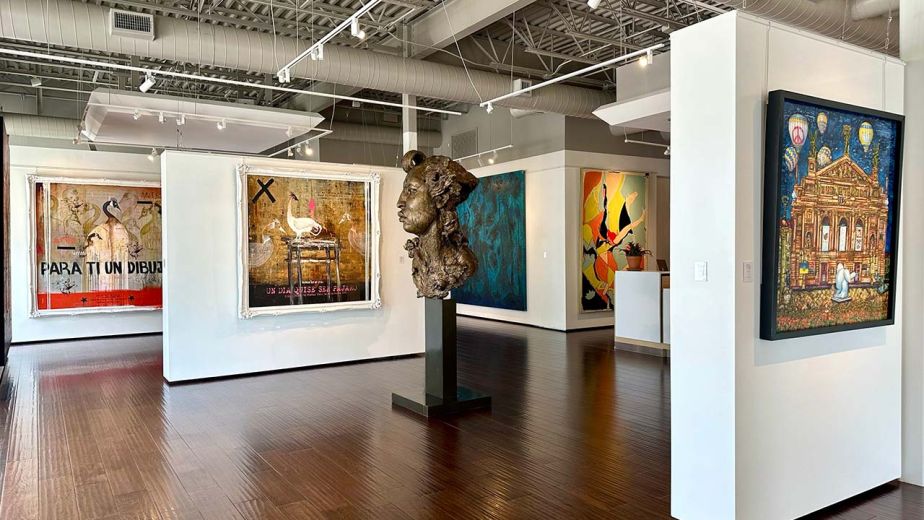

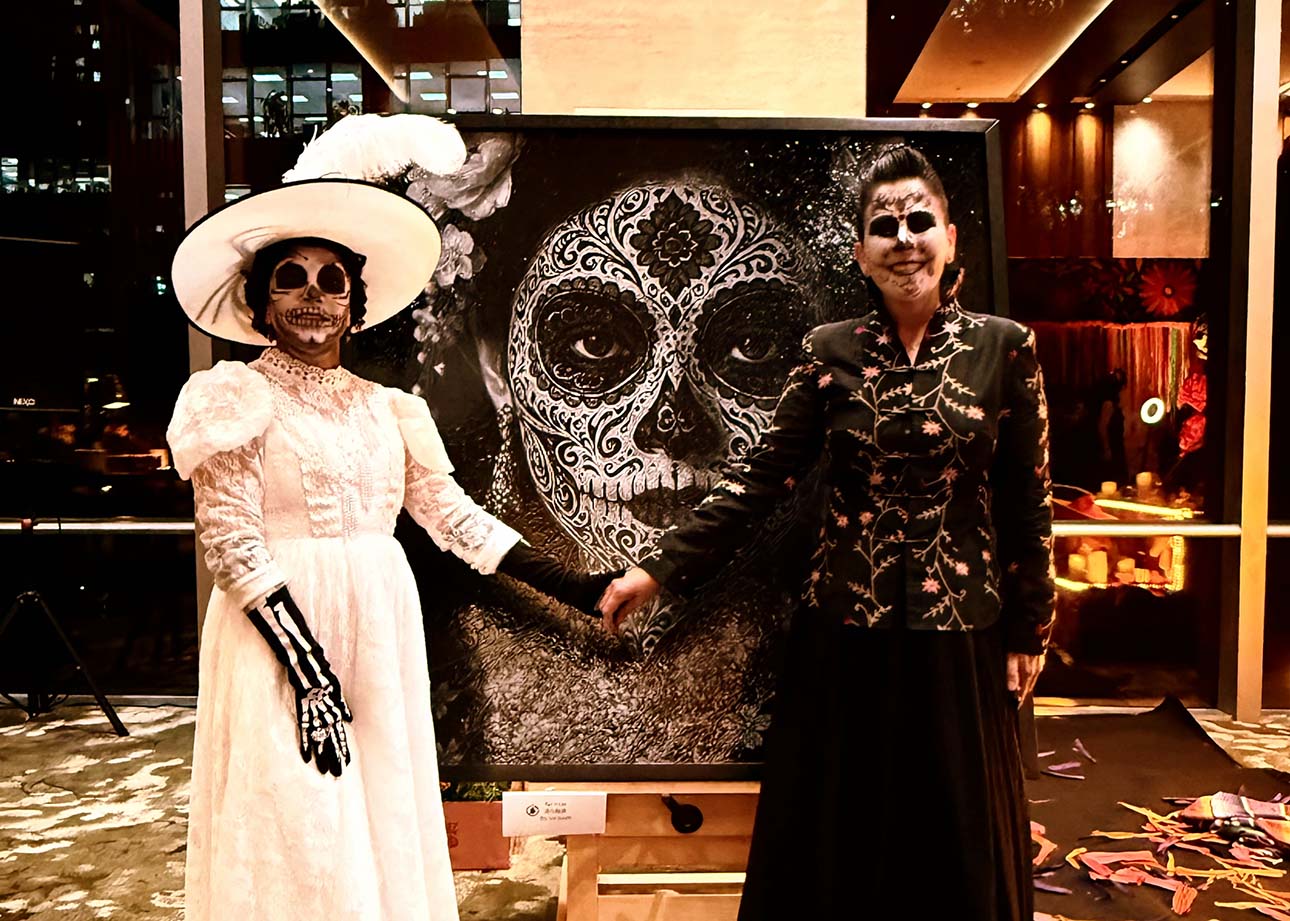
In November 2025, the Embassy of Mexico in China became the setting for a deeply symbolic encounter between two civilizations of extraordinary cultural richness. With Cruce de Destinos, Karla de Lara brought to Beijing an exhibition that moves beyond the pictorial realm and enters the territory of dialogue, memory, and the spiritual resonance between Mexico and China.
A bridge between East and West
More than an exhibition, Cruce de Destinos is conceived as a sensitive bridge between East and West. Through it, the artist constructs a visual narrative in which color, identity, and tradition become a shared language. Through her vibrant, powerful, and deeply symbolic visual universe, Karla de Lara proposes a conversation between two ancient worlds that, although geographically distant, find common ground in their historical depth, ceremonial spirit, and relationship with transcendence.
“Cruce de Destinos is not just an exhibition. It is a tribute to life, culture, and the power of art to unite hearts.”
Karla de Lara
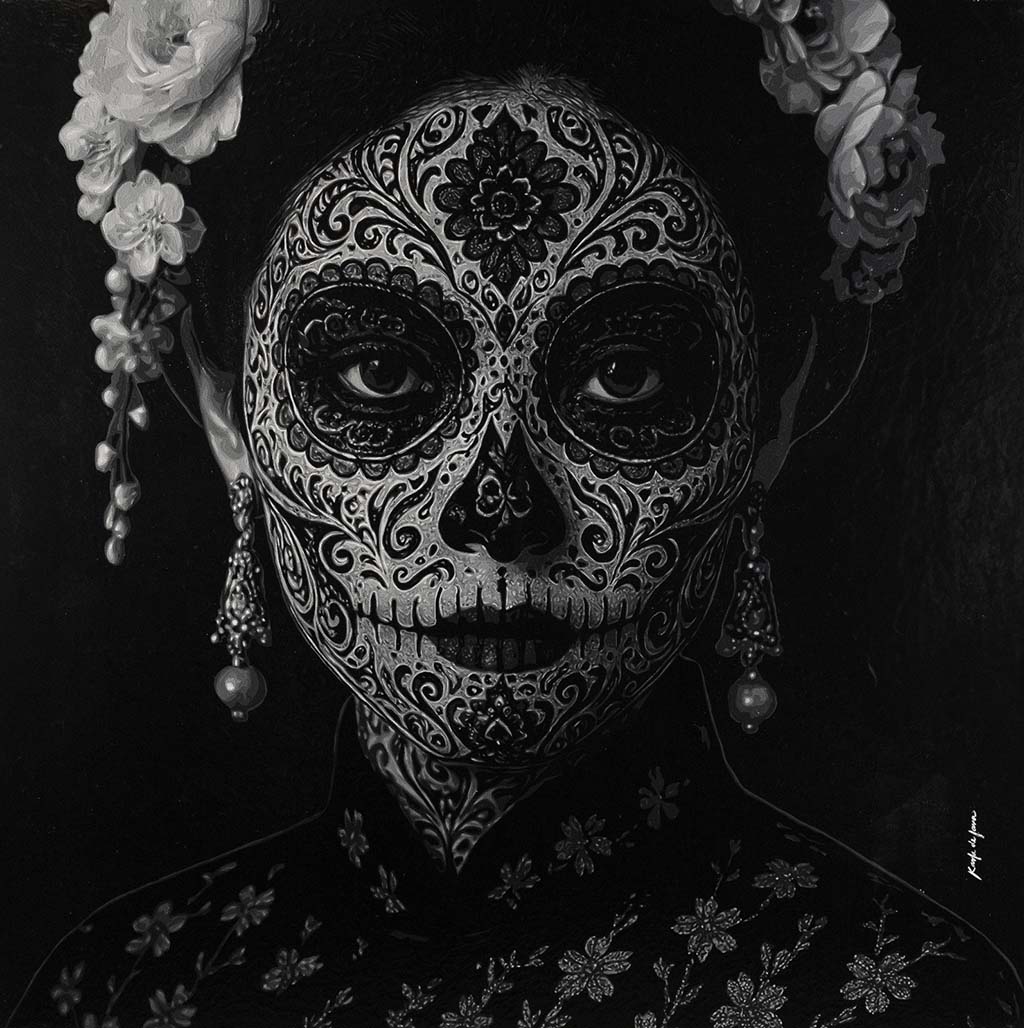
The central axis of the exhibition is the Catrinas, emblematic figures in the Mexican imagination that embody a singular understanding of life, death, and the permanence of the spirit. In Karla de Lara’s hands, these presences acquire a new dimension: they not only evoke a national tradition but also emerge as universal symbols of memory, beauty, and continuity. Here, the Catrinas do not speak only of absence; they speak of transformation, inheritance, and the possibility of turning remembrance into eternity.
Beijing as a space of cultural resonance
The exhibition finds a setting of particular intensity in Beijing. A city marked by history, solemnity, and immeasurable cultural energy, the Chinese capital serves as both a counterpart and a mirror to the artist’s proposal. Within this diplomatic and cultural framework, Cruce de Destinos takes on an even deeper significance: it becomes a gesture of closeness between nations, a celebration of sensitivity as common ground, and an affirmation of art as a language capable of uniting hearts beyond language, geography, or time.
From a curatorial perspective, the strength of this exhibition lies in its ability to inhabit several temporalities at once: it honors tradition, reinterprets symbols, and projects them into a contemporary space open to cultural exchange. Karla de Lara does not reproduce a folkloric imagination; she expands it, recontextualizes it, and transforms it into a living vehicle of representation. Her work proposes a luminous, complex, and deeply emotive Mexicanness, capable of engaging with other cultural horizons without losing its roots.
Art as tribute and connection
Cruce de Destinos thus reaffirms Karla de Lara’s place as an artist whose work not only represents Mexico but projects it into the world through a poetic, contemporary, and universal vision. At the Embassy of Mexico in China, this exhibition emerged as a tribute to life, memory, and the power of art to build bridges where there was once only distance.