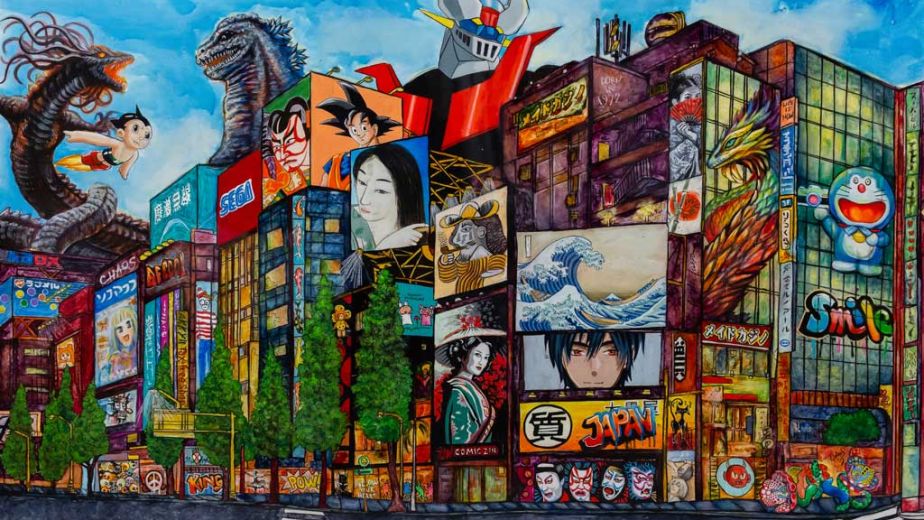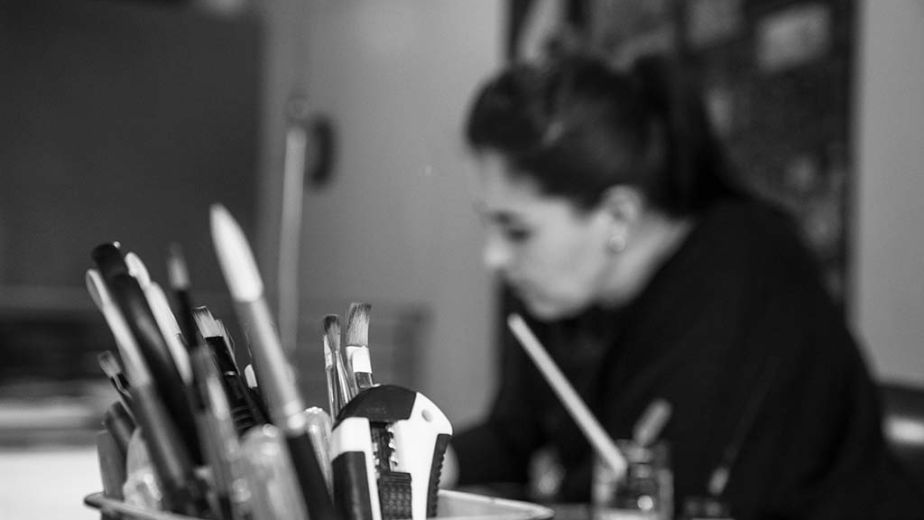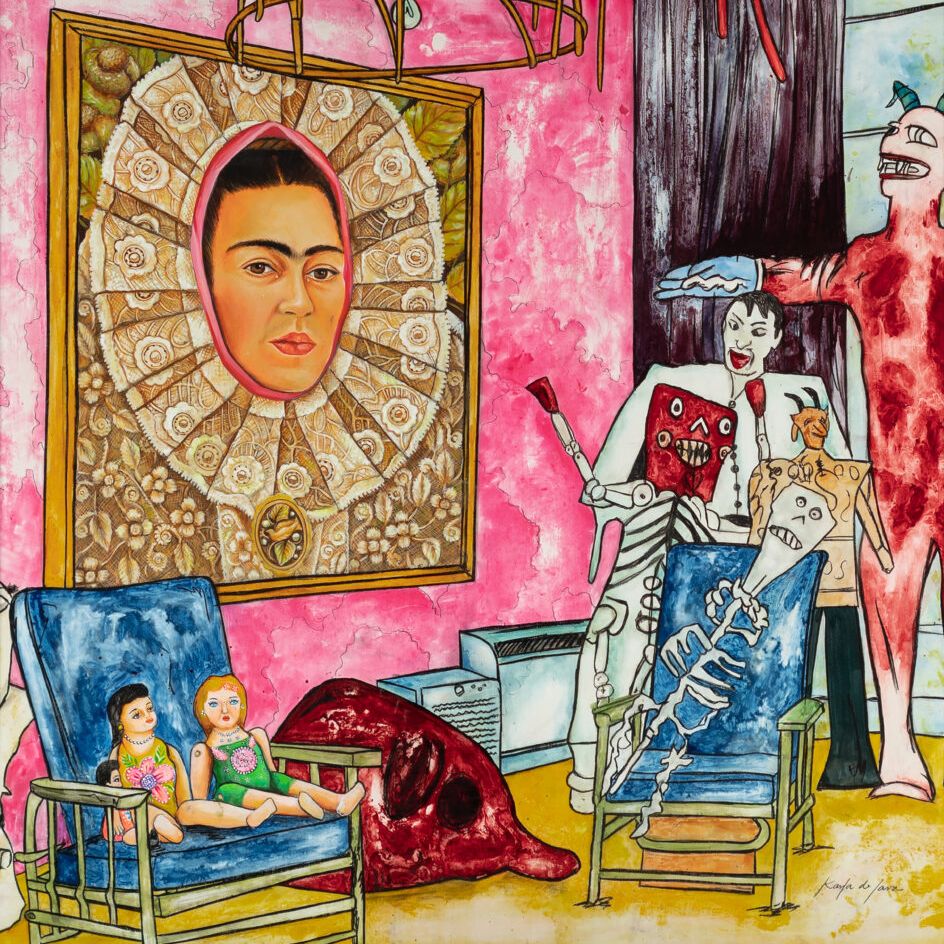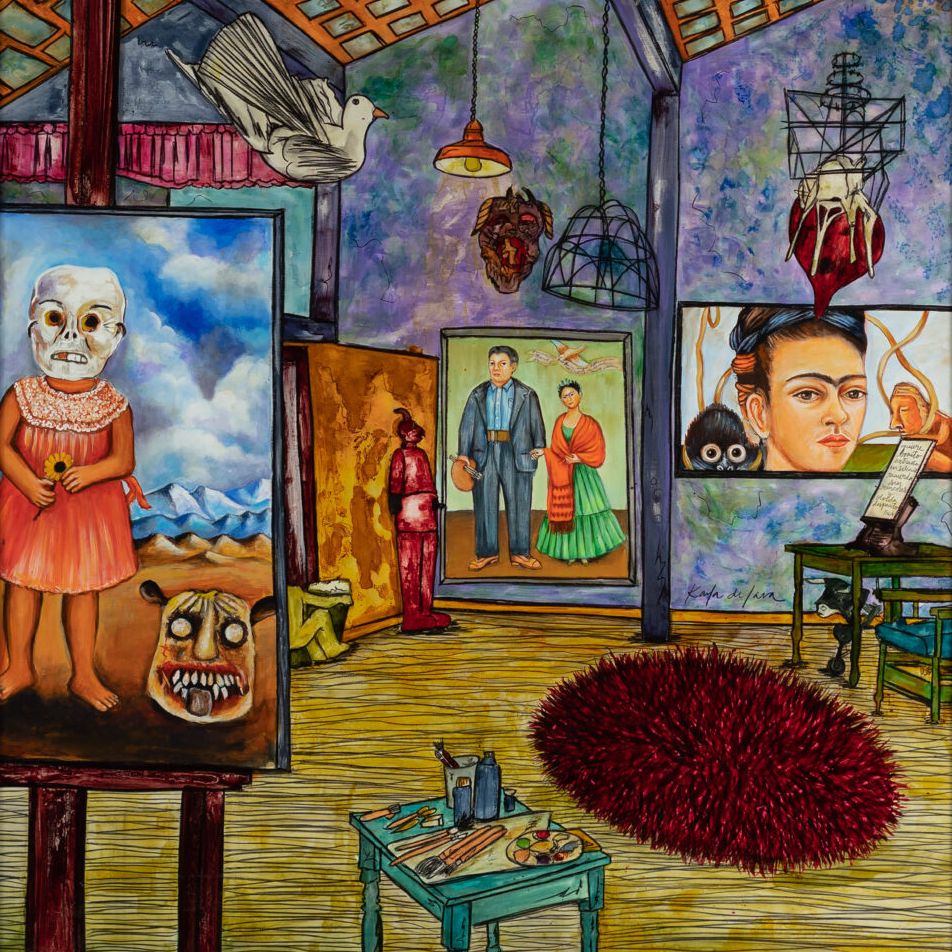
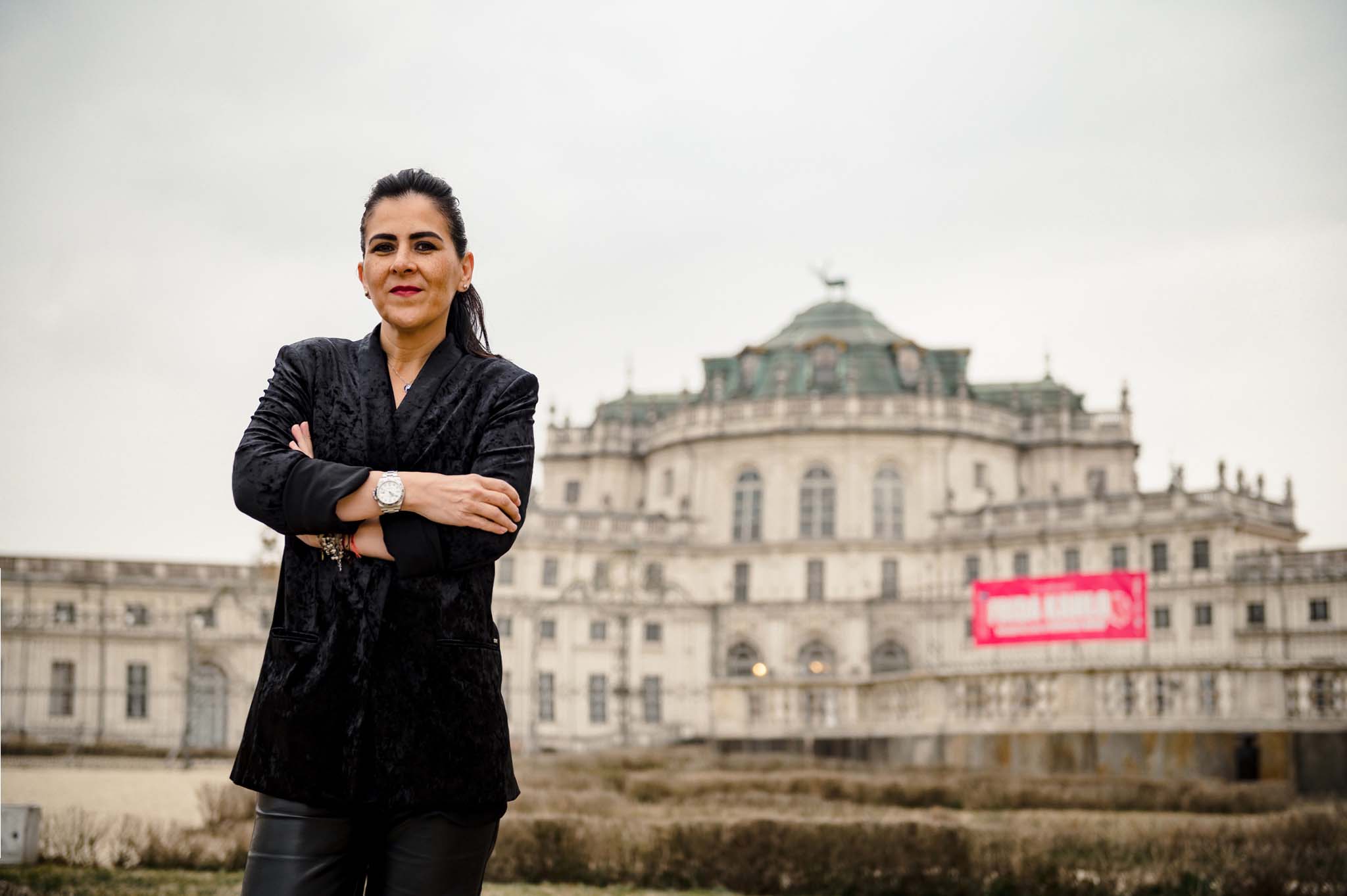
Karla de Lara presented the exhibition “Anime Intrecciate” at the historic Palazzina di Caccia di Stupinigi in Turin, Italy, a show held from March to June 2022 in one of the most remarkable examples of Baroque architecture in Europe. The exhibition was presented alongside “Frida Kahlo through the Lens of Nickolas Muray,” creating a symbolic dialogue between two Mexican artists from different generations, united by the strength of their cultural identity.
A historic setting for contemporary art
The Palazzina di Caccia di Stupinigi, built in the eighteenth century as a hunting residence for the House of Savoy, is considered one of the architectural jewels of Italian Baroque and forms part of the UNESCO World Heritage Sites known as the Residences of the Royal House of Savoy.
Hosting a contemporary exhibition in such a historic setting creates a powerful contrast: the palace architecture becomes a stage for new visual narratives that connect past and present.
Within this context, Karla de Lara’s work found a symbolic environment for exploring themes of cultural heritage and contemporary identity.
Mexico as a visual narrative
The title of the exhibition, “Anime Intrecciate” —meaning Intertwined Souls— evokes the connection between cultures, histories, and artistic sensibilities.
The exhibition brought together a series of works exploring portraiture and the female figure through the artist’s distinctive hyperrealist pop language, characterized by technical precision, vibrant color, and emotional depth.
The dialogue with the exhibition dedicated to Frida Kahlo added an important historical dimension to the project. While Nickolas Muray’s photographs revealed Kahlo’s personal universe, Karla de Lara’s paintings offered a contemporary perspective on Mexican identity and its global resonance.
Two generations of Mexican artists
The coexistence of both exhibitions created a symbolic meeting between two generations of Mexican creators.
Frida Kahlo’s legacy continues to shape the global understanding of Mexican art and cultural identity, and within this context, Karla de Lara’s presence represented a contemporary continuation of that artistic lineage.
The curatorial text of the exhibition emphasized this connection:
“In this exhibition you will find Mexico: the story of two artists, two proud women, spokespersons of color, traditions, and the exploration of a nation’s artistic landscape.”
Chiara Candellone Sticca
A cultural bridge between Mexico and Europe
Anime Intrecciate ultimately became a meeting point between two cultural worlds. Karla de Lara’s work, deeply rooted in Mexican identity, entered into dialogue with European artistic history within one of Italy’s most elegant architectural settings.
For the artist, the exhibition marked an important moment in her international journey.